
The Brand Gap By Marty Neumeier

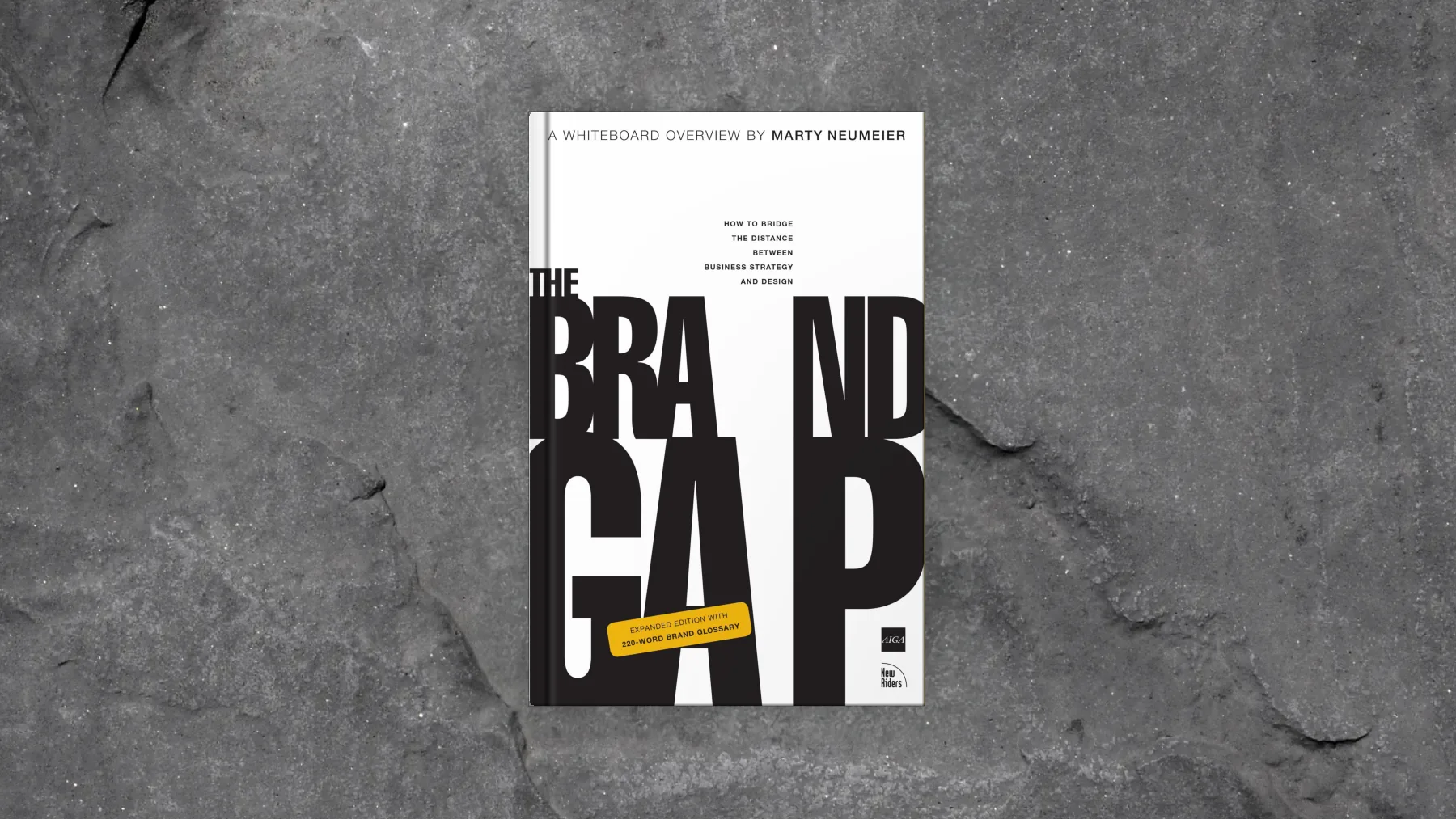
The book we’d hand anyone who thinks a brand is a logo. Marty Neumeier explains it in an afternoon, with pictures.
Few words get misused in business as often as “brand”. People mean the logo, the colours, the tagline, the budget line on a spreadsheet. In The Brand Gap, Marty Neumeier cuts through all of it with a single definition.
“A brand is a person’s gut feeling about a product, service, or company.” It isn’t what you say it is. It’s what they say it is. Everything else in the book follows from that shift in perspective.
Neumeier’s real subject is the gap between strategy and creativity—the logical people and the magical people who so often fail to understand each other. He sets out five disciplines to close it: differentiate, collaborate, innovate, validate and cultivate. The book is designed like a presentation, with lots of white space, and it reads in an hour or two.
Pivotal takeaways
- The customer owns the brand. You can shape how people feel, but you don’t get the final word. They do.
- Differentiate or disappear. Start with the questions: who are you, what do you do, and why does it matter? If you can’t answer clearly, nobody else will.
- Strategy and creativity need each other. Brilliant strategy nobody notices fails. So does brilliant creative with nothing behind it.
- Test before you commit. Validate ideas with real audiences early. Opinions in a meeting room are not evidence.
Why it’s a must-read
At Pivotal, brand sits underneath everything we build—every website, every campaign, every email. Neumeier explains why consistency matters and why a brand is built one touchpoint at a time. It’s the clearest short explanation of the subject we know of.
It’s also a great shared reference. Hand it to a finance director, a founder and a designer, and they’ll come back speaking the same language.
The format is part of the point. Neumeier practises what he preaches—clear, simple, memorable—and the book is all the more persuasive for it.
Rating: ★★★★★
Short, clever and endlessly useful. If you only read one book about branding, make it this one. Then keep it somewhere visible, because you’ll want to lend it to the next person who asks for “a new logo” when what they really need is a brand.
Question for you. If you asked five customers for their gut feeling about your business, what would they say? Share in the comments, and let’s close the gap.