
SPIN Selling By Neil Rackham

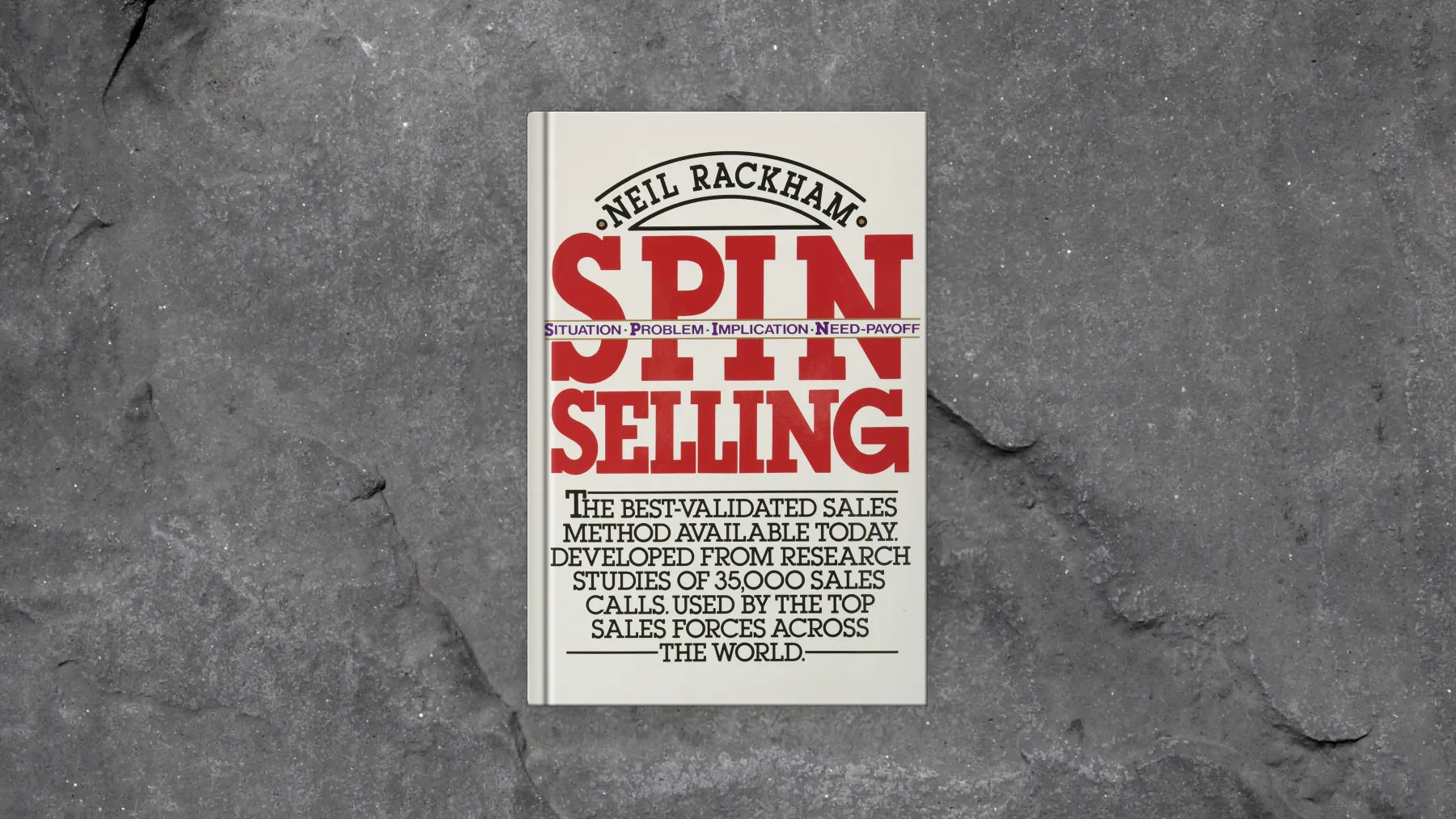
Forget closing techniques. Neil Rackham shows that the best salespeople win by asking better questions.
Most sales advice is built on opinion and anecdote. SPIN Selling is built on evidence. Neil Rackham and his team at Huthwaite studied around 35,000 sales calls to find out what actually separated successful salespeople from the rest.
Their big finding was that techniques which work in small, quick sales often backfire in large ones. Pushy closing, in particular, can hurt a big deal. What mattered most was the questions the seller asked. It’s a finding that still surprises people who were taught to always be closing.
Rackham organises those questions into four types: Situation, Problem, Implication and Need-payoff. Together they give SPIN its name, and a structure for helping buyers see the true size of their problem. Published in the late 1980s, it remains one of the most respected sales books ever written.
Pivotal takeaways
- Ask fewer situation questions. Gather background, but don’t bore the buyer with things you could have researched yourself.
- Uncover the problem. Problem questions find the difficulties and dissatisfactions your offer can actually address.
- Explore the implications. Implication questions help a buyer see the real cost of a problem—often far bigger than they first thought.
- Let the buyer state the value. Need-payoff questions invite the customer to explain the benefits in their own words. That’s far more persuasive than you saying it.
Why it’s a must-read
At Pivotal, we believe good work starts with understanding the problem properly. The best briefs come from asking “what happens if this doesn’t get fixed?” rather than jumping straight to solutions. Rackham turns that instinct into a repeatable method.
It’s valuable well beyond sales. Discovery sessions, project kick-offs and client reviews all improve when you ask better questions and listen harder to the answers. Good questions also build trust, because they show you care more about the client’s problem than your own pitch.
The writing is a little dry in places, and some examples show their age. The research, though, is rigorous, and the framework is as useful today as when it was first published.
Rating: ★★★★★
A classic for good reason. If you have any part in winning work, this should be on your shelf. Try one well-chosen implication question in your next meeting and notice how the conversation changes. You may never look at a sales script the same way again.
Your challenge. What’s the best question a salesperson or client has ever asked you? Share in the comments, and let’s build a better list together.