
Thinking, Fast And Slow By Daniel Kahneman

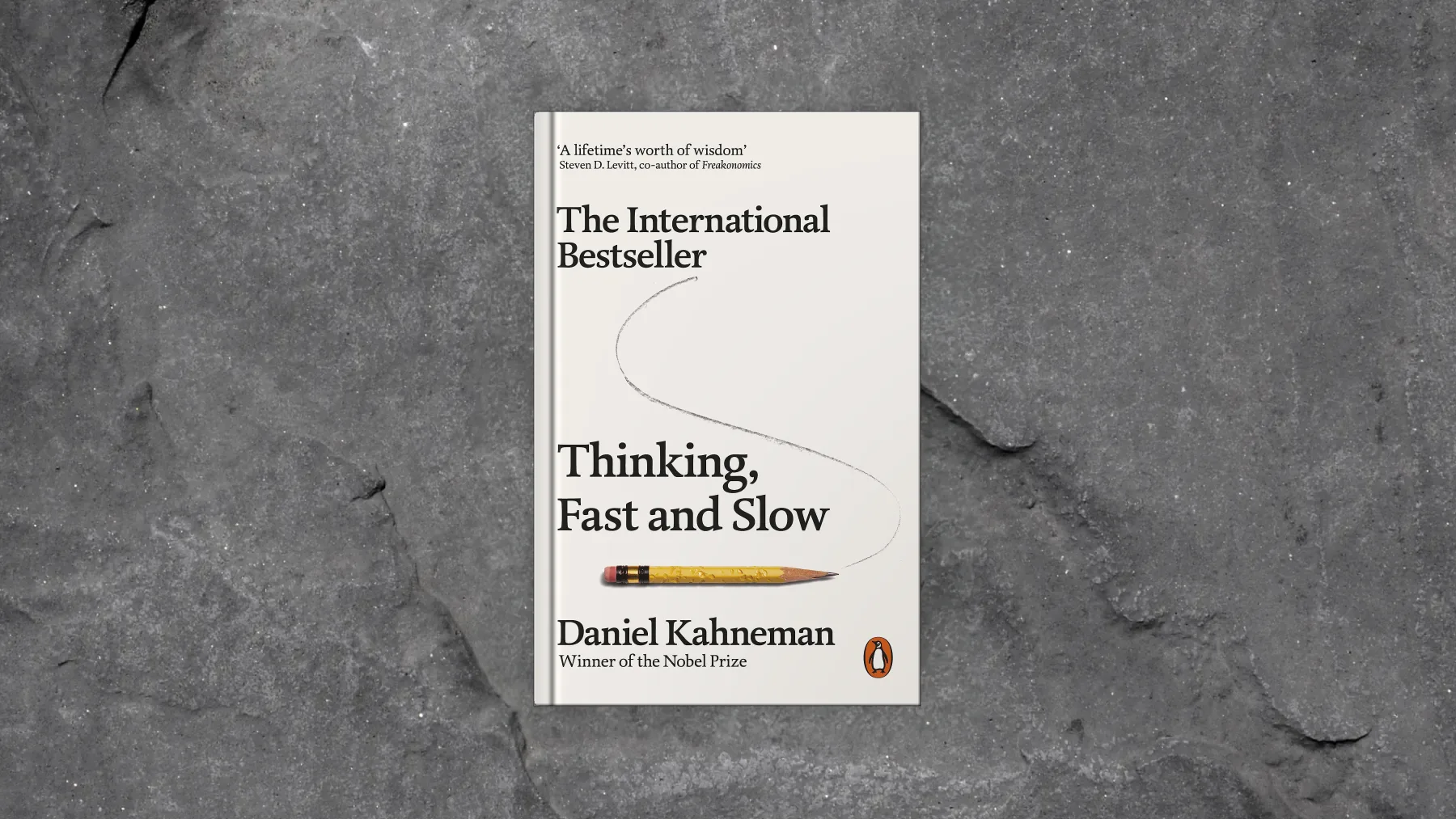
A Nobel Prize-winning tour of the mind. Not a quick read, but one that changes how you see every decision.
Daniel Kahneman won the Nobel Prize in Economics for his work on how people make decisions. Thinking, Fast and Slow brings decades of that research together in one extraordinary book.
Kahneman describes two systems in our minds. System 1 is fast, intuitive and emotional. System 2 is slow, deliberate and logical. We like to think we use the second. Most of the time, we rely on the first. Much of what we call marketing works because it speaks to System 1, whether marketers realise it or not. Understanding the difference makes you both a better marketer and a more careful decision-maker.
It’s not a light read, but it’s one of the most important books ever written about how people think. Every chapter overturns something you assumed about yourself.
Pivotal takeaways
- We’re less rational than we think. Most decisions are made quickly and intuitively, then justified afterwards.
- Losses loom larger than gains. People feel the pain of losing more than the pleasure of winning, which shapes how they respond to every offer.
- Anchors shape judgement. The first number we see influences everything that follows—even when it’s irrelevant.
- Framing changes everything. The same facts, presented differently, lead to very different choices.
Why it’s a must-read
At Pivotal, understanding how customers really decide is at the heart of what we do. Kahneman’s work underpins much of modern behavioural marketing, from pricing pages to checkout design. The biases he describes show up in every funnel we analyse.
It’s dense in places and rewards patience. Take it slowly—fittingly, it’s a book for System 2.
Once you’ve read it, you’ll never look at a price, a default option or a “limited time” message in the same way again.
Rating: ★★★★☆
A landmark work. Challenging, fascinating and endlessly relevant to anyone who sells anything. Keep it close whenever you design a pricing page, a checkout or a sales conversation, and revisit a chapter whenever a result surprises you.
Your take. What’s a decision you made quickly that you later regretted? Share in the comments, and let’s talk about slowing down.