
The Psychology Of Money By Morgan Housel

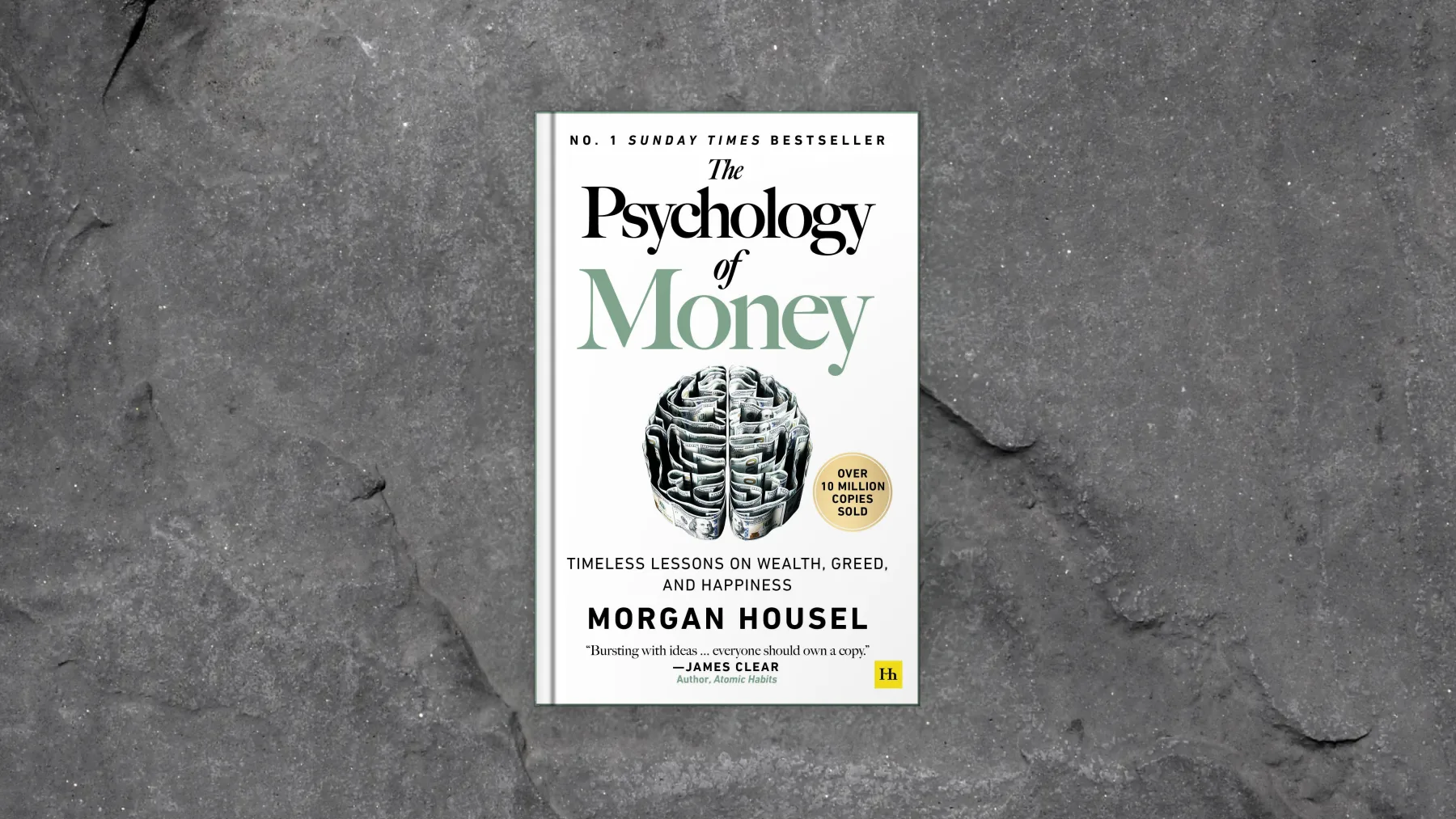
Short chapters, big ideas. The rare money book that’s really about people—and why we behave the way we do.
Morgan Housel’s The Psychology of Money isn’t a book about spreadsheets or stock tips. It’s about behaviour—the habits, fears and stories that shape every financial decision we make.
Across 19 short chapters, Housel argues that doing well with money has less to do with how smart you are and more to do with how you behave. It’s a lesson that applies just as much to running a business as it does to running your own finances.
You won’t find complicated formulas here. Instead, you’ll find stories—about luck, risk, greed and happiness—that make you rethink your own relationship with money.
Pivotal takeaways
- Getting rich and staying rich are different skills. Getting there takes risk and optimism. Staying there takes humility and a healthy fear of losing it all.
- Compounding needs time. The most powerful force in finance only works if you give it long enough. Patience beats brilliance.
- Leave room for error. Plans rarely go to plan. A margin of safety lets you survive the surprises that always come.
- Know what “enough” looks like. Moving the goalposts forever is a recipe for taking risks you don’t need to take.
Why it’s a must-read
At Pivotal, we talk a lot about profit, margin and long-term value. Housel’s ideas about patience, resilience and avoiding ruin are exactly the principles that build businesses that last. Slow and steady really does win.
It’s also beautifully written. Every chapter stands on its own, which makes it the perfect book to read in short bursts—and to pass on once you’re done.
The chapter on luck and risk is a useful dose of humility, too. Not every success is down to skill, and not every failure is down to bad decisions.
Rating: ★★★★★
One of the most useful books you’ll ever read, whatever you do for a living. It’s one of those rare books that you’ll want to give to your team, your family and your friends—and they’ll thank you for it.
Your take. What does “enough” look like for you and your business? Share in the comments, and let’s keep the conversation honest.