
The Lean Startup By Eric Ries

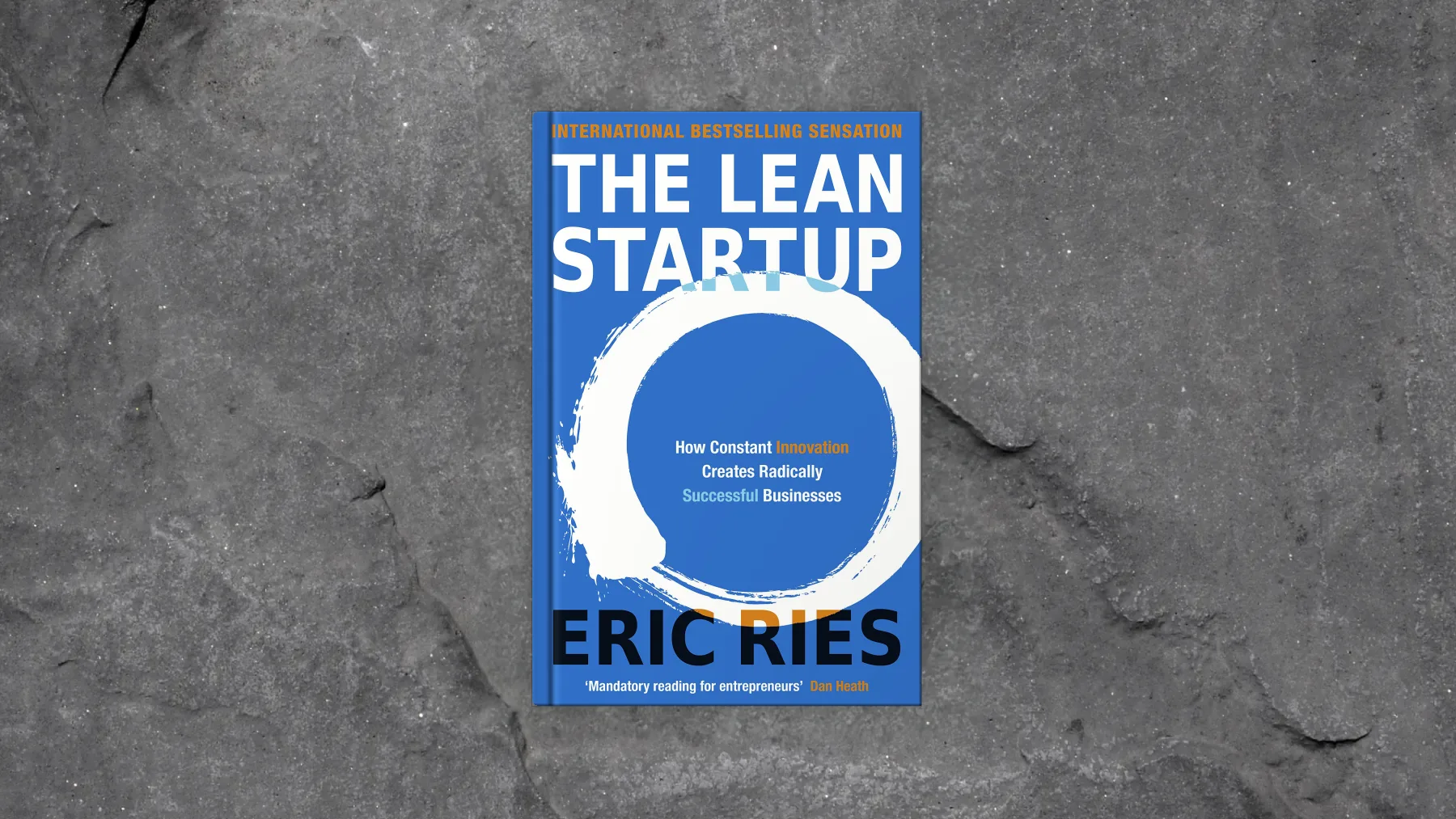
The book that taught a generation to test before they build. Its most famous idea? Knowing when to pivot.
Most new products fail not because they’re badly made, but because nobody wanted them in the first place. In The Lean Startup, Eric Ries offers a better way to build.
Instead of spending months perfecting a plan, Ries argues you should treat every idea as an experiment—launch quickly, measure what happens and learn fast. It’s a scientific approach to business, and it takes much of the guesswork, ego and wasted budget out of launching something new.
Ries developed the approach from his own start-up failures and successes, and the book is full of honest stories about what went wrong—and what he learned.
Pivotal takeaways
- Build, measure, learn. Shorten the loop between having an idea and finding out whether it works. Speed of learning is everything.
- Launch a minimum viable product. Release the simplest version that lets you test your assumptions with real customers.
- Use actionable metrics. Ignore vanity numbers. Measure the things that tell you whether you’re genuinely making progress.
- Pivot or persevere. When the evidence says your approach isn’t working, change course—without abandoning the vision.
Why it’s a must-read
At Pivotal, the name says it all. We’re huge fans of testing, learning and adapting, and Ries’ approach applies just as well to marketing campaigns and websites as it does to start-ups. A small, well-designed test today can save a very expensive mistake tomorrow.
You don’t need to be a tech founder to benefit. Any business launching a new product, service or campaign will waste less and learn more by following this method.
The idea of “validated learning” is particularly powerful. Progress isn’t how much you’ve built, it’s how much you’ve learned about what customers actually want.
Rating: ★★★★☆
A modern classic that changed how the world builds things. Read it before your next launch. Its ideas apply to far more than software: every new service, campaign and market you enter will benefit from a little more testing and a little less guessing.
Your turn. What’s one assumption about your customers you’ve never actually tested? Share in the comments, and let’s design the experiment.