
The E-Myth Revisited By Michael Gerber

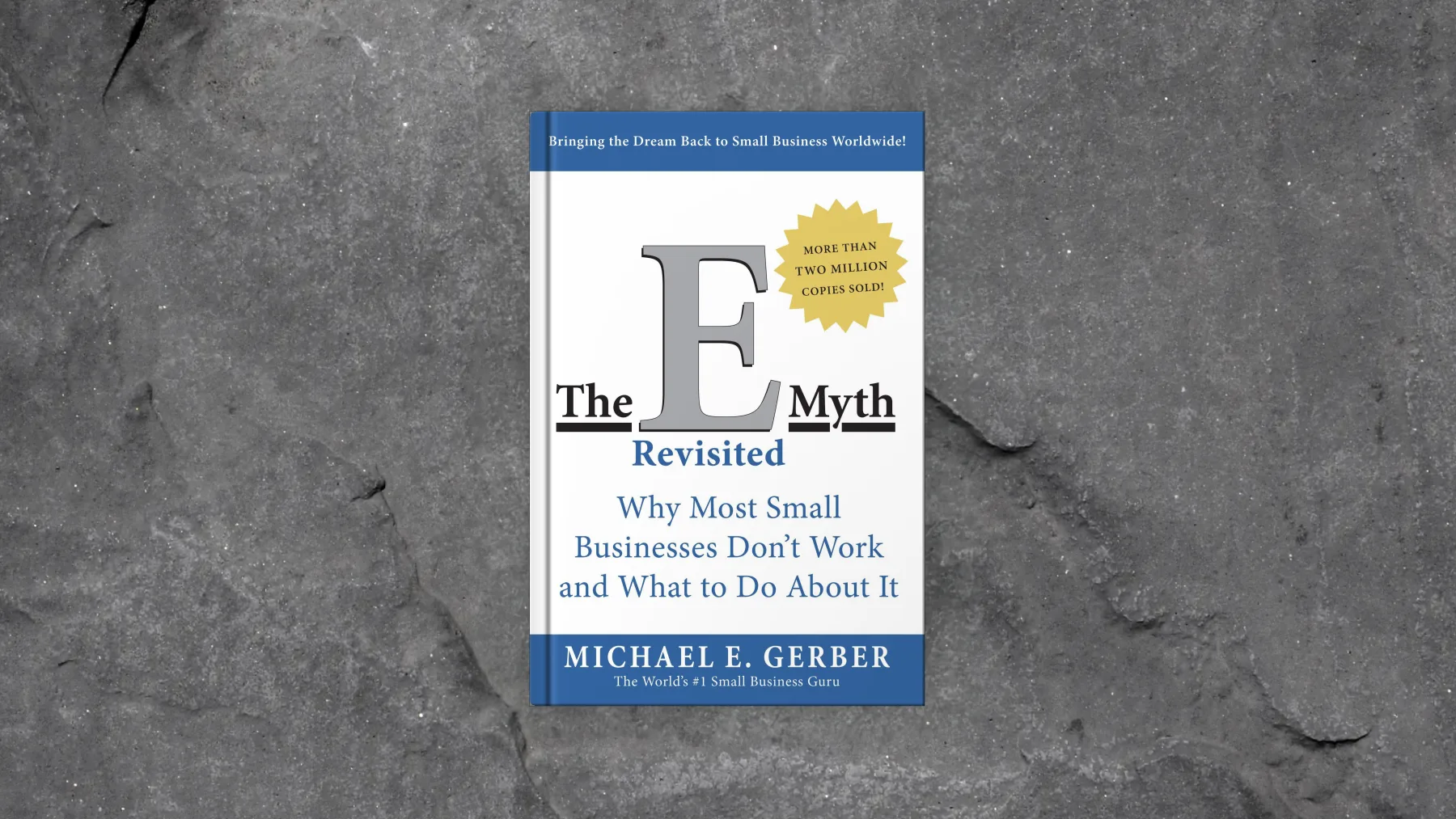
The book that explains why so many talented people build businesses that end up owning them. Uncomfortably accurate.
Michael Gerber’s The E-Myth Revisited tackles a myth that catches out countless business owners: that being good at the work means you’ll be good at running a business that does the work.
Told through a conversation with Sarah, a baker whose passion has turned into exhaustion, the book explains why most small businesses struggle—and what to do about it.
If you’ve ever thought “it’s quicker if I just do it myself”, this book is for you. Gerber explains exactly why that thought is holding you back.
Pivotal takeaways
- Work on your business, not just in it. If you’re doing all the work, you don’t own a business—you own a job. Step back and build the machine.
- We all wear three hats. Every owner is part technician, part manager and part entrepreneur. Most spend nearly all their time as the technician.
- Systemise everything. Build your business as if you were going to franchise it. Documented processes create consistency and free you up.
- Design the business around your life. Start with the life you want, then build the business to support it—not the other way around.
Why it’s a must-read
At Pivotal, we work with a lot of founder-led businesses, and Gerber’s diagnosis is uncannily familiar. The owners who grow fastest are the ones who stop being the bottleneck. Freedom is built, not found.
It’s also why we care so much about systems, automation and joined-up tools. Every repeatable task you systemise is time handed back to the work only you can do.
Gerber’s idea of the “turnkey” business—one that delivers the same result every time, whoever is doing the work—is still one of the most useful goals any owner can set.
Rating: ★★★★☆
Some of the storytelling is dated, but the message isn’t. If you feel trapped by your own business, start here. Read it, then block out an afternoon to write down the first three processes you’ll document. That’s where the freedom starts.
Your turn. What’s one task you’re still doing that a system could do for you? Share in the comments, and let’s work out how to hand it over.